10.6.2026
Prefab vs. Custom ADU. Your Lot Decides More Than the Build Method Does
This is the default text value
This is the default text value
This is the default text value
,
This is the default text value
This is the default text value
Lorem ipsum dolor sit amet, consectetur adipiscing elit. Suspendisse varius enim in eros elementum tristique. Duis cursus, mi quis viverra ornare, eros dolor interdum nulla, ut commodo diam libero vitae erat.
Default Button Text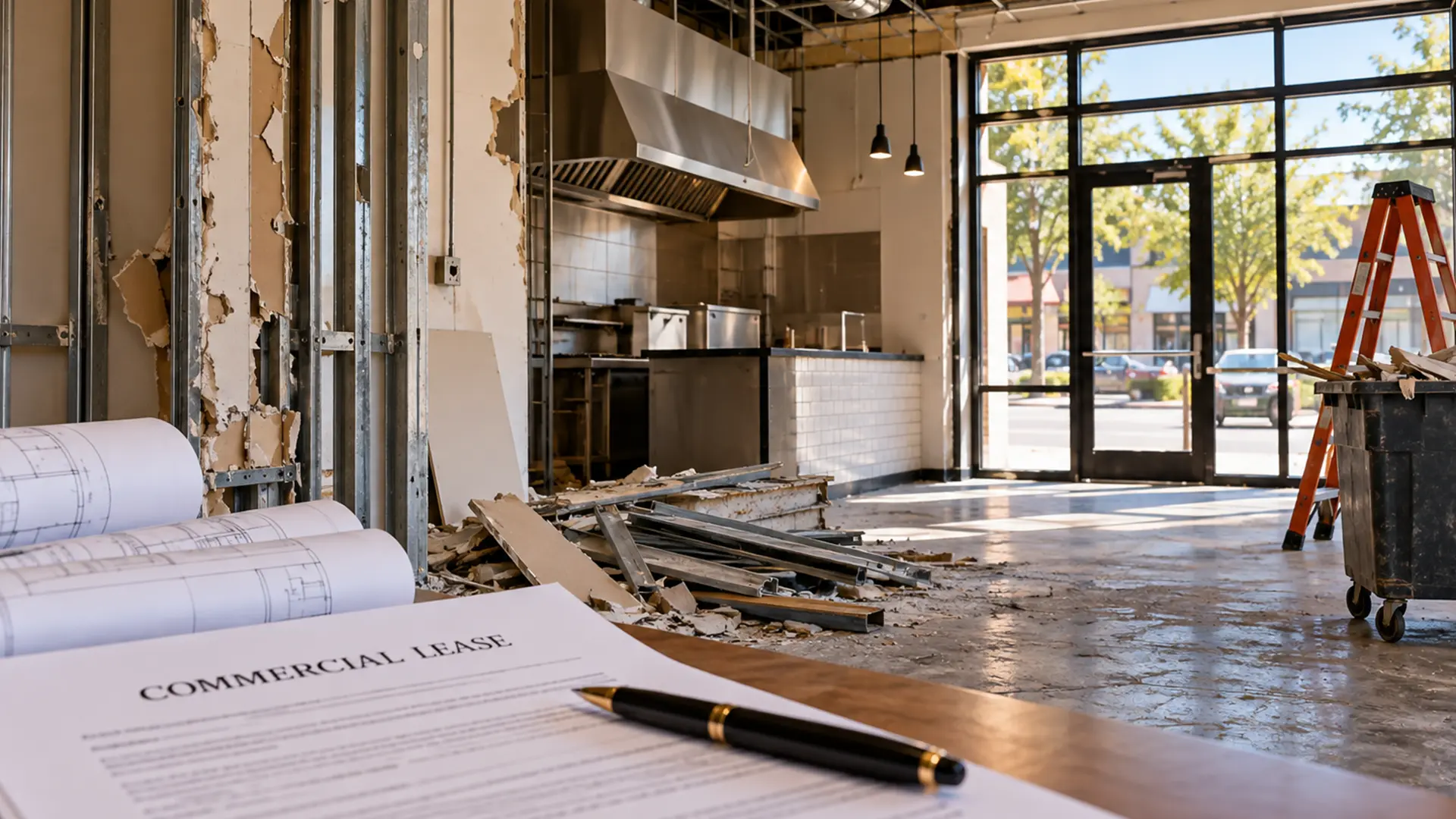
Under one of the standard commercial lease forms widely used in California, your landlord can tell you which of your improvements have to come out as late as 30 days before your lease ends. That's 30 days to scope the work, pull a demolition permit if one is needed, get the work done, and hand back the keys. The walls, the kitchen hood, and the storefront the landlord approved years earlier can all be on that list.
Whether that notice can arrive at all, and what it can cover, was decided long before. It was settled when you signed the lease, and again each time the landlord approved a piece of your build-out. This article covers what those documents decide, which improvements are most likely to be flagged, and what to settle while you're still building, when it costs the least.
This is general information about how commercial leases in California commonly work, not legal advice. Your lease language controls, and a California commercial real estate attorney should review it before you rely on any of this.
Yes, if your lease, work letter, or a later approval letter gives them that right. Approving your plans, owning the improvements, and requiring you to remove them are three separate questions. A lease can answer each one differently.
A common landlord-friendly structure works in three steps. Your improvements become the landlord's property. The landlord keeps the right to elect, later, that you remove some or all of them anyway. And you must finish the removal and repair the damage before the lease expires. The AIR CRE multi-tenant lease form is a good reference point. It lets the landlord require removal of your alterations by written notice delivered no earlier than 90 days and no later than 30 days before expiration. Work you did without approval can be ordered out at any time.
If your lease says nothing about removal, California's default rules apply. Under Civil Code section 1013, things permanently attached to the building generally belong to the landlord. Under section 1019, you can remove trade fixtures during the lease term, meaning things installed for your business that can come out without damaging the space. Neither statute requires you to strip the space back to a bare shell. A duty that broad has to come from the lease.
The wording of the surrender clause matters as much as the removal clause. "Broom clean" usually means debris out and the space basically clean. "Restore to original condition" can mean much more. If your build-out removed an existing restroom, ceiling, or wall, that language can make you responsible for putting it back.
Restoration exposure rarely sits in one paragraph. Read these together:
Bring in a commercial real estate attorney when the lease includes a late landlord election, an "original condition" standard, a short notice window, holdover penalties tied to unfinished work, or when your build-out cuts through the roof, slab, or structure.
Not by itself. No California fixture statute decides removal based on who paid for the improvement. What matters is the lease language and how the improvement is attached to the building.
A lease can say that improvements funded by the tenant improvement (TI) allowance become the landlord's property and can still be designated for removal. Under that language, the landlord's money doesn't protect you. Funding is still a strong argument when you negotiate. It's reasonable to ask that work the landlord paid for, especially standard, reusable work, be allowed to stay. But the protection has to be written into the lease. Excluding allowance-funded work from removal is not an established market custom in Sacramento or the Bay Area. It's something you ask for.
The allowance has its own set of traps on the way in. Reimbursement timing, eligible costs, and expiration dates are covered in what your lease decides about your build-out before you sign.
Specialty systems and anything tied to your brand. Ordinary, building-standard work is less exposed, because the next tenant can use it.
Published lease clauses often single out supplemental heating, ventilation, and air conditioning (HVAC) and its ductwork, server or data rooms, dense data cabling, raised floors, nonstandard fire protection, and internal stairs between floors. Internal stairs carry the most structural exposure. Removing one can mean closing a floor opening and restoring the structure around it. Ordinary partitions, ceiling grid, doors, standard lighting, and carpet are lower risk, and some leases carve them out of removal entirely.
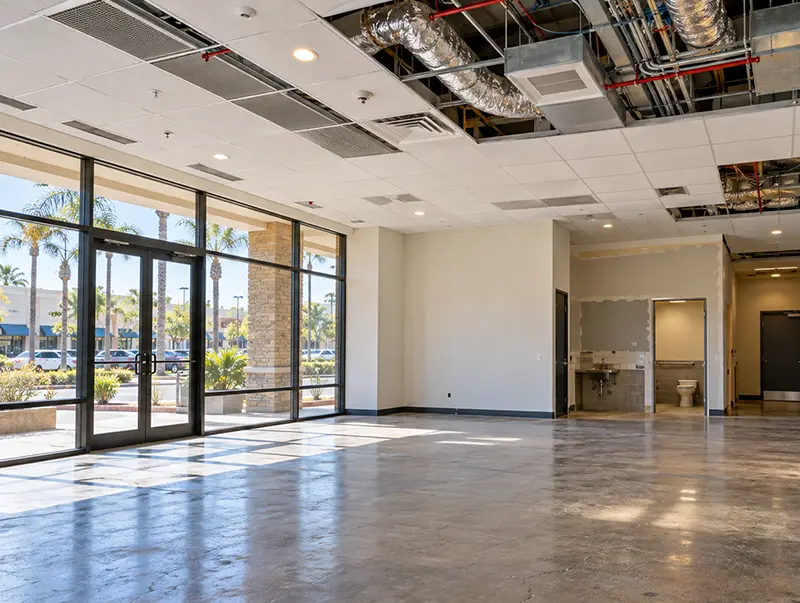
Any office or showroom build that adds stairs or a branded storefront, like this Sacramento showroom-and-office tenant improvement with prefabricated metal stairs and a glass storefront, includes items worth naming one by one in the landlord's approval.
Retail exposure follows your brand. Exterior and interior signage, a modified storefront, display platforms, specialty lighting, and floor-anchored fixtures are the common candidates. Signage is the most likely to come out, because it identifies the tenant who is leaving. Removing it usually means repairing the facade and closing the penetrations, too. Ask whether your built-in displays count as trade fixtures or as alterations, because the answer decides who owns them and whether they must leave. These questions belong in the approval stage of any retail build-out, before the storefront is changed.
Restaurants carry the most removal exposure and the most potential value. The hood and exhaust, grease interceptor, gas service, upgraded electrical, plumbing and floor drains, walk-in cooler, and fire suppression all cross from your space into the building's systems. Whether the landlord wants them out depends on what comes next. The next section covers that.
It depends on whether the landlord expects the next tenant to be another restaurant. Restaurant infrastructure can be worth a lot to a successor or worth nothing, and the lease usually lets the landlord decide which after you've already built it.
ICSC, the shopping center industry association, reports that second-generation restaurant space, where the kitchen infrastructure is already in place, can save an incoming restaurant significant cost and time. An existing grease interceptor and upgraded utilities are specifically valuable. The same reporting notes that old equipment may have no value at all.
A landlord is more likely to want your kitchen infrastructure left in place when:
A landlord is more likely to demand removal when:
You can't control who leases the space after you. You can control whether your kitchen is documented and maintained well enough to be worth keeping, and whether the lease says what happens if a successor restaurant wants it. When a restaurant build-out is being designed, ask who owns each component of the hood system, whether the grease interceptor must be removed, abandoned in place, or cleaned and left, and whether gas and plumbing get capped or removed at the end.
At each approval, in writing. Once your build-out is in place and the landlord holds a late election right, the landlord can wait to see what the next tenant wants, and you can't budget your exit until the notice arrives.
These are the levers that show up in negotiated California commercial leases:
If you've already signed, the same idea still applies to every later alteration. Ask that each approval letter say in writing whether that improvement must be removed. When you renew or amend the lease, you can also ask for a "clean slate" amendment that waives removal of improvements already in place.
Choices that keep your work separate from the building's structure and systems. They lower the physical cost of removal. They don't change your legal obligation to remove, which comes from the lease alone.
The choices that matter most are:
Here's what we can't tell you: no study shows that landlords waive removal more often because a tenant built with demountable walls or modular systems. Anyone who says a particular construction method eliminates restoration risk is selling something. The method lowers the cost of removal if removal is required. The lease decides whether it is.
Four kinds of records, kept from the start: photos of the space before you built, every landlord approval, drawings of what was actually built, and permit and inspection records. At the end of a lease, disputes are usually about what the space looked like before, what was approved, and what's behind the walls. Each record answers one of those.
One limit is worth knowing. Drawings of what was built show what's there. They don't prove the landlord approved it. They protect you only when paired with the approval letters.
No reliable published figures exist for lease-end removal and restoration costs in Sacramento or the Bay Area, for office, retail, or restaurant space. Removal is bid job by job against the scope your lease requires and what's found behind the walls. Anyone giving you a per-square-foot removal number without seeing your lease and your space is guessing.
What you can know in advance is what drives the cost:
Under some leases, unfinished removal counts as not having surrendered the space. That can trigger holdover rent and liability for the landlord's losses, such as a delayed delivery to the next tenant. Depending on the lease, holdover exposure can exceed the cost of the removal work itself.
Your security deposit won't necessarily cap the damage. California Civil Code section 1950.7 governs how a landlord can use and return a commercial security deposit. It doesn't make the deposit a limit on what the landlord can claim under the lease. A deposit becomes your maximum exposure only if a lease term or a signed surrender agreement says so.
Timing is the protection. Twelve to 18 months before your lease ends, gather every lease document and approval, list every alteration, and ask the landlord for a preliminary walk-through. For a restaurant kitchen, an internal stair, or a storefront, six to 12 months out is when design, asbestos survey, permits, bidding, and utility coordination need to start, because all of it comes before demolition. If a removal notice arrives late, vague, or inconsistent with your approval letters, respond promptly, reserve your rights in writing, and get legal advice before you start work. Ignoring it or quietly starting the work can both weaken your position.
Five things, all cheaper to settle before construction starts than to negotiate at lease end:
This works best when you know the scope of the space you need before the lease is final. Removal conditions get attached to specific items, and the landlord can't name items that haven't been designed yet. We draw tenant improvements, take them through permitting, and build them under one contract, so the plans the landlord reviews are the same plans we build from. If you want a contractor reading the approval conditions next to the drawings before either one is final, that review is far cheaper than a removal notice.
From residential remodeling to commercial construction