Planning a Comfortable Sunroom Addition for Your Northern California Home
Lorem ipsum dolor sit amet, consectetur adipiscing elit. Suspendisse varius enim in eros elementum tristique. Duis cursus, mi quis viverra ornare, eros dolor interdum nulla, ut commodo diam libero vitae erat.
If you live in Sacramento or elsewhere in Northern California, you already know the weather can be a bit of a rollercoaster. Summer days push past 100°F, nights can dip into the 30s in winter, and yet we get an incredible amount of sunshine all year.
That’s why so many homeowners start thinking about a sunroom. More light. More connection to the yard. A place to read, work, or have coffee that feels like a mini vacation—without leaving home.
But here’s the catch: in our climate, a sunroom can either be the most-used room in the house… or a beautiful but mostly unusable “glass box” that’s too hot in August and too cold in January.
In this guide, we’ll walk through how to plan a comfortable, code-compliant sunroom addition for your Northern California home, with examples from a two-level sunroom and addition project in Sacramento that Global Arch Construction is currently building.
Start with the Space You Actually Need, Not the Product Name
Most homeowners call us saying, “We want a sunroom.” When we start asking questions, what they really want is:
A quiet reading nook.
A bright home office.
A kids’ playroom that doesn’t take over the living room.
A second living area that feels connected to the yard.
A light-filled extension of the kitchen or dining room.
You don’t have to decide between “sunroom, patio room, or full addition” on your own. The first step is to think about how you want to use the space and how often.
We usually walk homeowners through questions like:
How many days a year do you want to use this room?
Are you okay with it being “too hot” or “too cold” sometimes, or should it feel like the rest of the house?
Do you need it for specific functions—office, guest space, playroom, plant room?
How long do you plan to stay in the home?
Is this more about everyday quality of life, resale value, or both?
From there, we talk about options:
Three-season sunroom – Often unconditioned or lightly conditioned, may be uncomfortable on the hottest/coldest days.
Four-season sunroom – Fully insulated, heated/cooled, finished like the rest of the house.
Solid-roof patio room – More shade, less glass overhead, can be conditioned or unconditioned.
Full room addition – Built like any other interior room, sometimes with extra windows or skylights for sunroom-like light.
In the Sacramento area, once we talk through comfort and use, most homeowners end up leaning toward a four-season, fully conditioned sunroom rather than a basic enclosure. They want real, everyday living space, not just a “nice room for spring and fall.”
Real Example – Turning a Porch into a Two-Level Sunroom & Addition in Sacramento
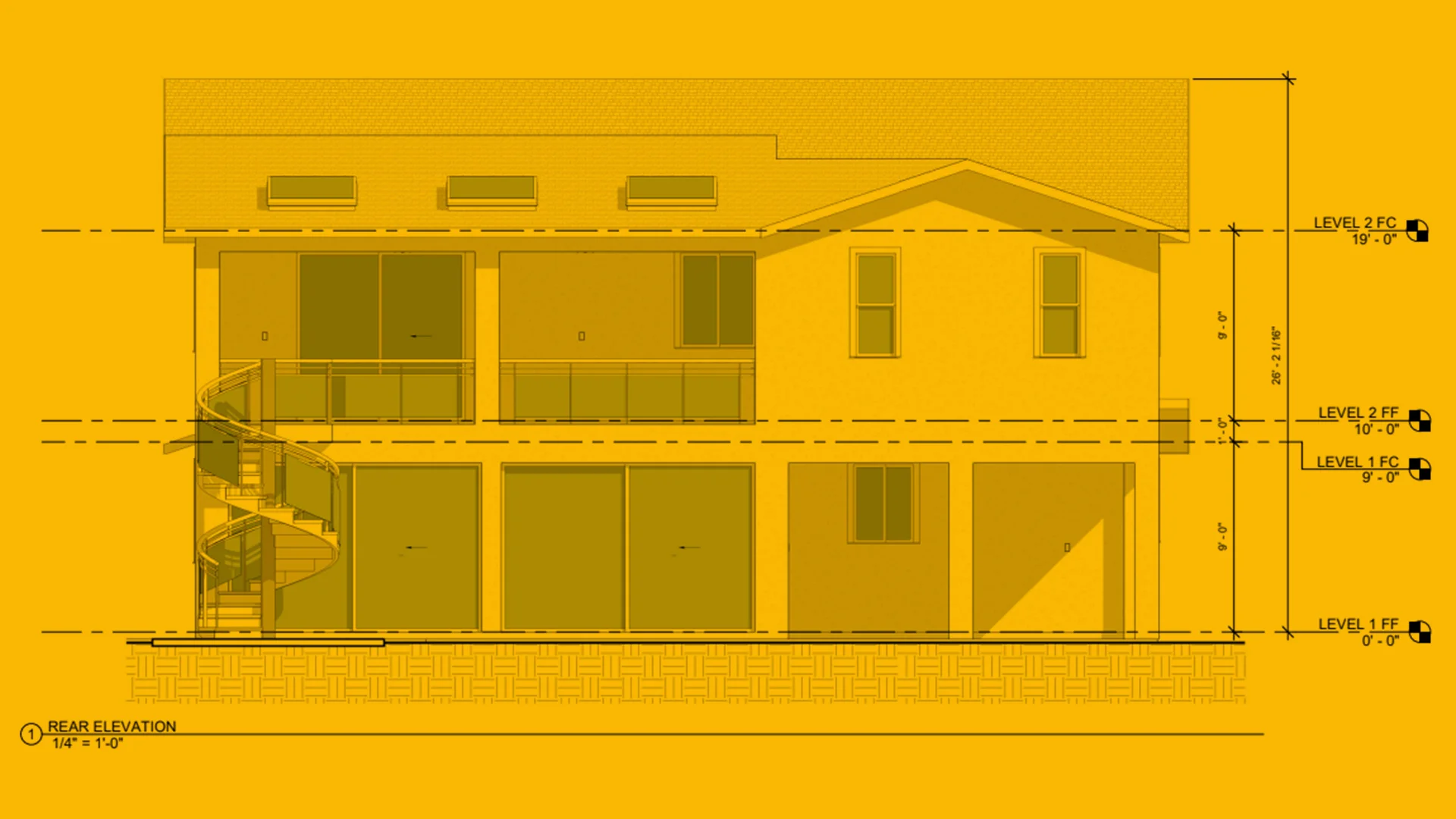
Blueprint of a Sacramento Sunroom Project Designed by Global Arch Construction - Front View
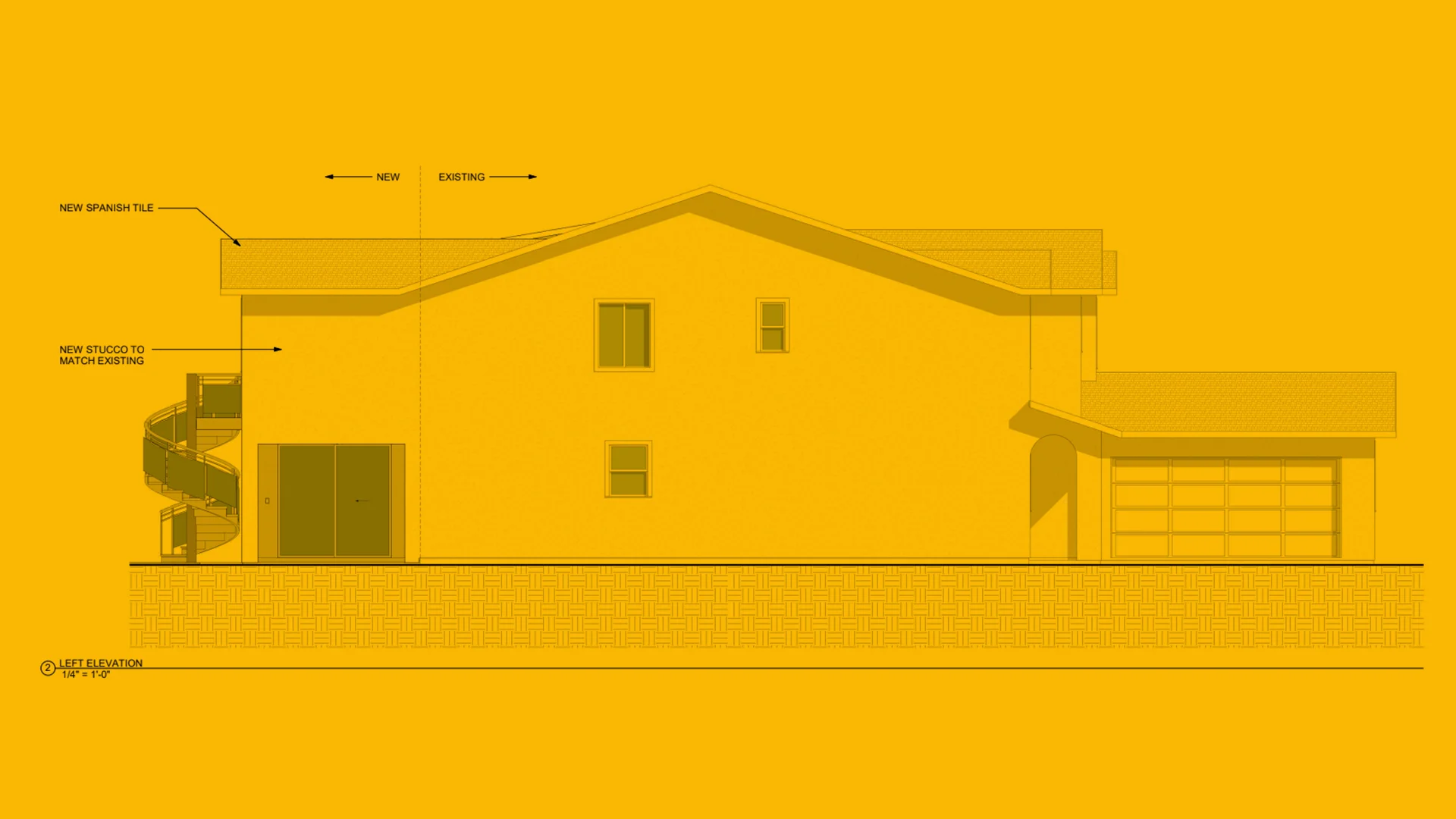
Blueprint of a Sacramento Sunroom Project Designed by Global Arch Construction - Side View
On a current project in Sacramento, the homeowners started with a simple idea: “We have this covered porch and upper deck. We’d love more usable space and better flow to the backyard.”
After walking through how they live, we designed a two-level solution:
Lower level:
Converting an existing 218 sq. ft. covered porch plus
Adding a 348 sq. ft. conditioned sunroom, all tied into the lower living space.
Upper level:
Adding a 223 sq. ft. conditioned room that extends the main-level living area.
Building a 352 sq. ft. covered deck for outdoor living above the new lower sunroom.
The result will be:
Bright, comfortable rooms on both levels that feel like true interior space.
A stronger connection between the home and the yard.
More usable outdoor space with shade and shelter.
We’ll refer back to this project as we walk through glass, HVAC, structure, and permits—so you can see how these decisions work in real life.
Comfort First – Glass, Framing, and HVAC That Work in Sacramento Heat
A sunroom that looks beautiful but feels like an oven in summer or a fridge in winter is a missed opportunity. Comfort is not just about “adding more AC.” It starts with glass, framing, and the right heating/cooling strategy.
Why the Right Glass and Frames Matter So Much
Glass is what makes a sunroom feel special—and it’s also where a lot of heat gain and heat loss can happen.
For Sacramento and Northern California, we usually recommend:
Dual-pane, Low-E insulated glass Reduces solar heat gain and helps keep winter heat inside, while also cutting UV that fades floors and furniture.
High-performance Low-E options Depending on orientation and design, we often step up to coatings that better manage our strong sun exposure.
Quality frame systems Vinyl or thermally broken frames help reduce “cold spots” and condensation compared to standard aluminum.
Tempered safety glass where required For doors, large panels, and low glass, we follow safety glazing requirements closely.
On our Sacramento project, the goal was a bright space that doesn’t feel harsh or glaring. That meant:
Carefully choosing glass performance to handle south and west exposures.
Coordinating frame color and style with the existing home so the addition feels integrated, not tacked on.
You don’t have to know all the technical terms. Our job is to translate your comfort goals (“we want it bright, but not blazing hot”) into the right glass and frame specs for this climate.
Heating and Cooling: Why We Often Recommend a Separate System
In many homes, the existing HVAC system was never sized for a large new sunroom. Simply extending ductwork can:
Overload the existing system.
Make the rest of the house less comfortable.
Trigger extra energy code requirements and duct testing.
That’s why, for four-season sunrooms, we often recommend:
Ductless mini-split heat pumps
Great for sunrooms and additions.
Provide both heating and cooling.
Allow you to set a different temperature than the rest of the home.
Very efficient and quiet.
We still evaluate extending the existing HVAC case by case, but we’re cautious. If it’s not a good idea, we’ll tell you—and explain why.
To support comfort even more, we also think about:
Operable windows for cross ventilation.
Ceiling fans to keep air moving.
Shading from roof overhangs, covered decks, or exterior elements.
Orientation of the sunroom relative to the sun and wind.
On the Sacramento project, each conditioned area is designed with its own properly sized heating and cooling, so both levels can stay comfortable without straining the original system.
Structure First – Foundations, Roof Tie-Ins, and Existing Slabs or Decks
Before we talk finishes or furniture layouts, we look at structure: what’s under your feet and what’s above your head.
Can We Use Your Existing Patio or Deck?
A common question is, “Can’t we just build walls on my existing slab or deck?”
Maybe. But we need to check a few things:
Was the slab or deck designed for an enclosed, conditioned room?
Are there proper footings and connections for the loads of walls, windows, and roof?
What’s the condition of the concrete, posts, joists, and beams?
Sometimes, a patio slab is fine if we’re doing a lightweight, unconditioned enclosure. But for a true four-season sunroom with insulation and heavy glass, we often need:
Stronger or deeper footings.
A new insulated slab with proper vapor barrier.
Structural tie-ins designed by an engineer.
Decks are similar. Many decks were built for outdoor loads only, not as the floor for an enclosed room. In those cases, we may recommend:
Reinforcing the existing structure.
Or rebuilding it as a true floor system designed to be enclosed.
When We Require New Footings or a New Slab
For most four-season sunrooms, we treat the structure like a real addition, not a “lightweight enclosure.”
That means:
New engineered foundations sized for the loads.
Floor systems designed for comfort and code-compliant deflection.
Roof framing that ties into the existing house the right way.
On our Sacramento project, we:
Evaluated the existing covered porch and deck structure carefully.
Designed new work to support the 348 sq. ft. sunroom at the lower level and the 223 sq. ft. addition plus 352 sq. ft. covered deck above.
Coordinated structural and architectural design so the home looks cohesive, not “patched together.”
This upfront work is what prevents problems like settling, cracking, and leaks later.
Permits, Title 24, and When Your Sunroom Counts as “Living Space”
In Northern California, you can’t ignore permits and energy code—especially for large glass areas and conditioned space.
Patio Enclosure vs True Conditioned Sunroom
We usually explain it this way:
Patio enclosure / unconditioned sunroom:
Enclosed space, but not fully heated/cooled.
May have lower insulation levels or simpler glass.
Treated more like an enclosed patio than a true interior room.
True conditioned sunroom / addition:
Insulated walls, floor, and roof to current code levels.
We translate that into plain English for you and build it into the design from day one.
Permits, Inspections, and Appraisal Value
Doing a sunroom without permits can create real problems later:
Issues with insurance claims.
Headaches when you try to refinance or sell.
Even orders to remove or bring the structure up to code.
When we design a four-season sunroom addition, our goal is that it:
Functions like true interior space.
Looks integrated with the existing home.
Gives appraisers a clear, code-compliant basis to treat it more like living area when appropriate (final treatment is always up to the appraiser and lender).
Global Arch Construction typically handles:
Site measurements and as-built plans.
Structural engineering and Title 24 energy reports.
Permit submittals and revisions.
Coordination with inspectors.
You get the benefit of a properly documented project without having to navigate the city or county on your own.
Neighbors, HOAs, and a Sunroom That Fits the Neighborhood
Even when you’re fully within code, neighbors and HOAs can still have concerns. We try to stay ahead of that.
Common issues include:
Privacy (windows looking into neighboring yards).
Views and perceived “bulk” of the addition.
Glare from large glass surfaces.
Noise during construction.
Here’s how we design to minimize problems:
Window and door placement Avoiding direct sightlines into neighbors’ windows whenever possible.
Partial-height walls and glass choices Using frosted or obscure glass where privacy is important.
Covered decks and railings Designing upper-level spaces (like the new covered deck on our Sacramento project) to feel open for you but not intrusive for neighbors.
Landscaping and screens Planning for trees, shrubs, or screens as part of the overall design.
If there’s an HOA, we help with:
Drawings and elevations.
Material and color descriptions.
Answering design-related questions so they can see the project fits the community.
A good sunroom addition should feel like it belongs—to your house and to your neighborhood.
What Really Drives the Cost of a Sunroom Addition
Every home and project is different, but we see the same main cost drivers over and over:
Size and complexity A simple single-level sunroom is different from a two-level solution like the Sacramento project.
Type of space
Unconditioned enclosure.
Four-season sunroom.
Full addition with extra glazing.
Glass and roof choices Higher-performance glass and insulated roofs cost more up front but improve comfort and efficiency.
Foundation and structure Reusing a suitable slab or deck vs building new footings or a new slab.
HVAC and electrical Adding a mini-split system, panel upgrades, lighting, outlets, and exterior circuits.
Interior and exterior finishes Flooring, trim, paint, ceiling finishes, siding, stucco, and roofing to match the home.
At Global Arch Construction, we don’t just drop a single number. We usually:
Start with your desired use and comfort level.
Show how different choices affect both performance and budget.
Develop a solution that aligns with what matters most to you—sometimes even in phases (for example, building the shell now and upgrading finishes later).
How Global Arch Construction Designs and Builds Sunrooms
To keep everything clear and predictable, we follow a simple, structured process.
Step 1: Discovery Call and On-Site Consultation
We talk about how you live, what’s not working in your current layout, and what you’d like this new space to do.
On site, we review:
Existing slabs, decks, and structure.
Sun exposure and views.
How a sunroom, patio room, or full addition could tie into the house.
Step 2: Concept Design and Options
We sketch layouts and discuss:
Different ways to place the sunroom or addition.
Glass, roof, and deck options.
A realistic range of investment for each approach.
On the Sacramento project, this step is where a simple “fix the porch” idea evolved into a paired lower sunroom + upper addition and covered deck that truly matched how the family wanted to live.
Step 3: Detailed Plans, Engineering, and Permits
Once a direction is chosen, we:
Prepare detailed architectural plans.
Coordinate structural engineering and Title 24 energy reports.
Handle permit submittals and respond to plan-check comments.
You know what’s going to be built, how it ties into your home, and what the city or county has already approved.
Step 4: Construction and Communication
We handle:
Site prep, foundations, framing, windows/doors, roofing, insulation, and finishes.
Careful tie-ins to the existing structure and weatherproofing details.
We keep you updated on:
Schedule and key milestones.
Inspection dates and results.
Any unexpected findings and recommended solutions.
Step 5: Final Walkthrough and Care Checklist
We walk the space with you:
Test windows, doors, lights, and HVAC.
Review any final touch-ups.
We provide a simple maintenance checklist specific to your project so you know how to care for your new sunroom over the years.
Checklist – Questions to Ask Any Sunroom Contractor in Northern California
Here’s a quick checklist you can use when comparing contractors:
Do you design and build four-season, fully conditioned sunrooms that meet current California energy codes?
How do you determine whether my existing slab or deck is adequate, or if we need new foundations?
What glass and frame systems do you typically use for sunroom additions in Sacramento and Northern California, and why?
Will you handle engineering, Title 24, and building permits, or is that on me?
How do you plan heating and cooling for sunrooms so they’re comfortable year-round?
Can you share examples of recent projects similar to my home? (For example, the two-level sunroom and addition we’re currently building in Sacramento.)
What does your communication process look like during construction?
Good answers to these questions will tell you a lot about whether a contractor is planning a “pretty box” or a durable, comfortable extension of your home.
Ready to Explore a Sunroom Addition? Your Next Step with Global Arch Construction
A well-planned sunroom can be so much more than extra square footage. Done right, it becomes:
The brightest, happiest room in the house.
A space that works in January and August—not just spring and fall.
A carefully integrated part of your home’s structure, comfort, and value.
At Global Arch Construction, we help homeowners across Sacramento and Northern California think through the real-world details—use, comfort, structure, energy code, neighbors, and budget—before we ever pour concrete or order glass.
If you’re comparing sunrooms additions in Sacramento and Northern California, and want guidance instead of a one-size-fits-all kit, we’d be glad to walk the site with you and talk through options.
Next step: Reach out to schedule a consultation or request a review of your existing patio or deck. We’ll help you decide whether a sunroom, a solid-roof patio room, or a full addition is the right fit for your home.
Sunroom FAQs for Sacramento Homeowners
Do I need a building permit for a sunroom in Sacramento or nearby cities?
In almost all cases, yes. If you’re enclosing space, changing structure, or creating conditioned living area, you’ll need permits and inspections. We handle the drawings, engineering, and permit process for you.
Can I just extend my existing HVAC into a new sunroom?
Sometimes, but not always. Many systems aren’t sized for the extra load, and simply adding ducts can cause comfort and code issues. That’s why we often recommend a dedicated mini-split system for four-season sunrooms.
Will my sunroom feel too hot in summer or too cold in winter?
Not if it’s designed correctly. With the right glass, framing, insulation, and HVAC, your sunroom can feel very similar to the rest of the house—even with more glass and better views.
Will a four-season sunroom count as square footage when I sell?
If it’s fully permitted, conditioned, and finished to the same standard as the rest of the home, appraisers are more likely to treat it like living area. Final decisions are always up to the appraiser and lender, but building it right improves your odds.
How long does a typical sunroom addition project take from design to final inspection?
Timelines vary, but a realistic range is a few months from first design to final inspection. That includes design, engineering, permits, and construction. On more complex projects—like two-level additions with decks—it can take longer. We’ll give you a tailored timeline after the initial design phase.
Dec 11, 2025
Similar Posts
From residential remodeling to commercial construction