How to Start a Construction Business in California (and Choose the Right House Remodeling Contractor in Sacramento)

Lorem ipsum dolor sit amet, consectetur adipiscing elit. Suspendisse varius enim in eros elementum tristique. Duis cursus, mi quis viverra ornare, eros dolor interdum nulla, ut commodo diam libero vitae erat.

Default Button Text

Jan 23, 2026
How to Start a Construction Business in Sacramento

1. A Construction Talk That Was Really About People, Not Just Permits

On a January evening in Sacramento, the room was full of very different people—immigrants with construction experience, young entrepreneurs, seasoned project managers, realtors, and homeowners who simply wanted to understand the industry better. They all came to hear one topic: “How to Start a Construction Business in California” with Alex Colta, CEO of Global Arch Construction.

On paper, that sounds like a dry subject: licenses, bonds, insurance, and building codes. In reality, the conversation was about something much more human:

  • How to build a life in a new country.
  • How to provide for your family using a skill you already have.
  • How to turn a house into a home instead of just “doing construction.”

If you’re here, you might be:

  • Thinking about starting or growing a construction business in California, or
  • Trying to find a reliable, design-build remodeling contractor in Sacramento for your kitchen, bathroom, ADU, or whole home renovation.

This article connects both perspectives. You’ll see:

  • What it really takes to become a licensed general contractor in California.
  • Why design-build and ADU construction are changing how people remodel their homes.
  • How to recognize a trustworthy house remodeling service in Sacramento—the kind you can hand your keys to and still sleep at night.

All of it is grounded in real experience: mistakes, lessons, late nights, and that quiet moment when a family walks into their finished kitchen and says, “This finally feels like us.”

2. Why California Construction Is Full of Real-Life Opportunity

California can feel like a wall of rules: Title 24, zoning, setbacks, inspections, permits, and a lot of acronyms. But behind that wall is something simple—people who need better places to live and work.

Families want:

  • Kitchens where everyone can fit, not just one person at a time.
  • Bathrooms that don’t feel like they’re from the 80s.
  • Extra space for parents moving in, kids moving back, or guests staying longer than planned.

Business owners want:

  • Offices where their team can actually focus.
  • Retail spaces that feel inviting, not outdated.
  • Construction that doesn’t drag on for months and cost them revenue.

This has created two big opportunities:

  1. For future contractors
    You can build a business focused on remodeling, ADUs, and design-build projects—if you’re willing to be clear, honest, and organized.
  2. For homeowners and investors
    You can dramatically increase your home’s comfort and value by working with a general contractor in Sacramento who understands both construction and life inside the home.

Instead of seeing California construction as “too complicated,” it helps to see it as structured opportunity. The rules are strict—but when you learn to work with them, they protect you and your clients.

2.1 Sacramento & the Bay Area: Where Remodeling Makes Sense

Sacramento and the Bay Area each have their own personality, but they share one thing: remodeling often makes more sense than moving.

In Sacramento, you’ll often find:

  • Older homes with good bones but outdated layouts.
  • Neighborhoods where garage conversions, ADUs, and home additions can add a lot of useful space.
  • Families who love their block, their school district, their neighbors—and just want their house to finally match their lifestyle.

In the Bay Area, land is scarce and expensive, so the question becomes:

  • How do we make the most of the property we already have?

That means:

  • Whole home remodeling instead of tearing everything down.
  • High-impact kitchen and bathroom renovations.
  • ADUs for long-term family use or rental income.

For contractors, this is work. For homeowners, it’s life: morning routines, homework at the kitchen island, grandparents living close instead of far away.

2.2 Why House Remodeling Services Keep Getting Busier

More and more Californians are discovering that “just buying a new house” isn’t always realistic—or even necessary. Interest rates, limited inventory, and emotional ties to a neighborhood change the equation.

So instead of leaving, people choose to:

  • Open up walls for an open-concept living space.
  • Create a larger, more functional kitchen where everyone can cook, talk, and hang out.
  • Build a walk-in shower or a more accessible bathroom for aging parents.
  • Turn a dusty garage into a cozy in-law suite or JADU.

This is where a design-build contractor makes life easier. With design-build:

  • You don’t have to coordinate between an architect and a separate contractor.
  • You don’t get caught in the “the plans say this, but the contractor says that” trap.
  • You work with one team from idea to final inspection.

The goal isn’t just to pass inspections. The goal is to walk into your home and feel:

“This finally works for us.”

3. From Moldova to California: Why This Story Matters for You

Alex’s story starts far from California. He grew up in Moldova, fascinated by how rooms, light, and layout change the way people feel in a space. That curiosity led him to study architecture and eventually step into the world of construction and design.

When he moved to the United States in 2014, nothing was handed to him. New country, new language, new codes. No one says, “Here’s your construction company; good luck.”

So he did what many immigrants do:

  • Took the work he could get.
  • Watched and learned how U.S. construction projects were actually run.
  • Worked as a project manager, studying plans, inspections, timelines, subcontractors, and budgets.

He made mistakes. He corrected them. He learned to balance client expectations, city requirements, and what actually happens on a jobsite when the weather, deliveries, or existing conditions don’t cooperate.

After years of this, he and his family opened Global Arch Construction in 2019. They didn’t start with giant mansions or huge commercial projects. They started with what real people actually need:

  • Remodels.
  • Additions.
  • ADUs.
  • Tenant improvements.

And over time, project by project, the company evolved into a design-build firm serving Sacramento and the Bay Area with:

  • Building Design & Planning
  • Custom Home Building
  • ADU Building & Additions
  • Whole Home Remodeling
  • Garage Conversions & In-Law Suites
  • Tenant Improvements & Commercial Remodeling
  • Interior & Exterior Renovations

The point of this story isn’t “Look how impressive this is.” The point is:

  • It didn’t happen overnight.
  • It was built the same way a good house is built: step by step, layer by layer.

If you’re starting out as a contractor—or trying to pick the right contractor for your home—that mindset matters. Quick shortcuts rarely lead to places you want to live in, literally or professionally.

4. You’re the Hero. The Contractor Is Just the Guide.

In the  approach, the customer is always the hero of the story. That means:

  • If you’re planning to start a construction business, your journey, your fears, and your goals matter most.
  • If you’re remodeling your Sacramento home, your daily life is at the center of the story—not the contractor’s logo.

The contractor’s role is to be the guide. A good guide:

  • Understands your problem.
  • Has walked the path before.
  • Offers a simple plan so you don’t feel lost.
  • Helps you avoid costly mistakes.

Your problems might sound like this:

  • “I’ve worked in construction for years, but I don’t know how to get licensed in California.”
  • “We’ve outgrown our home, but we don’t want to move away from our kids’ school.”
  • “My parents are getting older, and I want them close, but they also need privacy and accessibility.”

A good guide doesn’t respond with jargon. They say things like:

  • “Here’s what the CSLB is looking for in your experience.”
  • “Here’s how a whole home remodel could change your layout without you having to move.”
  • “Here’s how an ADU or in-law suite could give your parents their own entrance, bathroom, and calm space.”

When you feel seen, informed, and supported, that’s when you know you’re talking to the right partner—whether you’re building a business or a better home.

5. Licensing in California: The Rules That Protect Everyone

California doesn’t play games with construction licensing—and that’s actually good news. It means the state is trying to protect:

  • Homeowners from unsafe, unqualified work.
  • Serious contractors from being undercut by people who don’t follow the rules.

To manage most construction projects above a certain dollar amount, you need a license from the Contractors State License Board (CSLB). There are many classifications (electrical, plumbing, HVAC, etc.), but if you want to oversee:

  • Whole home remodeling
  • Kitchen and bathroom renovations
  • ADUs and additions
  • Tenant improvements and commercial remodels

…you’re usually aiming for a B – General Building Contractor license.

People often say, “Getting licensed in California is hard.” As Alex likes to clarify:

“It’s not hard. It’s strict. And strict is what keeps this industry professional.”

Strict doesn’t mean impossible. It means you need to follow a clear process.

5.1 General Contractor vs. Trade Licenses: Which Path Fits Your Life?

A General Contractor supervises the whole picture:

  • Coordinates subcontractors (electricians, plumbers, HVAC, etc.).
  • Manages schedules, inspections, and budgets.
  • Holds responsibility for the overall structure, finishes, and safety.

A trade contractor (like C-10 Electrical or C-36 Plumbing) focuses on one specialty. That can be a fantastic path if you love that trade and want to become the best at it.

If your dream is to:

  • Lead full remodels
  • Build custom homes
  • Deliver design-build ADU projects
  • Oversee commercial build-outs

…then the General Contractor license is often the better fit.

5.2 Using Your Experience and Degree to Qualify

To qualify for the General Contractor license, the standard requirement is:

  • Four years of experience in construction at a journey-level or above.

Here’s where a lot of people are pleasantly surprised:

  • A college degree can count for up to three of those four years.
  • The degree doesn’t have to be from the U.S.
  • It doesn’t have to be strictly “construction”—degrees like engineering or economics can count after evaluation.

The basic steps are:

  1. Translate your diploma into English using a certified translator.
  2. Send it for evaluation so experts can compare it to U.S. education standards.
  3. Submit the evaluation to the CSLB along with your experience documents.

Your hands-on experience can also come from outside the U.S. The CSLB has forms your past employer or supervisor can fill out describing:

  • What you did on the job.
  • What responsibilities you handled.
  • What types of projects you worked on.

If you moved to California with years of construction behind you, those years count. You don’t have to erase your past to build your future here.

6. Step by Step: Building Your Construction Business the Right Way

Starting a construction company isn’t about printing business cards and making an Instagram page. It’s more like building a foundation: if you rush it, every floor above it will crack later.

Here’s a simple overview Alex shared—one that also helps homeowners understand what a “real” contractor looks like behind the scenes.

StepFor Future ContractorsFor Homeowners Looking In1Gather and prove your experience and educationCheck if your contractor is properly licensed2Start the CSLB license applicationAsk how they handle permits and inspections3Prepare for the license exam and OSHA trainingAsk about their safety practices on site4Set up business entity, bond, and insuranceConfirm they have insurance and a contractor’s bond5Build a clear project process from first call to final walkthroughNotice how organized their communication and documents are

For upcoming contractors, there’s one mindset that makes a huge difference:

Don’t rush. Don’t stop.

The licensing journey and business setup often take months. That’s normal. You’re building something that’s supposed to last.

6.1 Preparing for the CSLB Exam and OSHA Courses

Experience is important, but the CSLB exam also covers:

  • Business law
  • Contracts and change orders
  • Safety regulations
  • Building codes

Many people choose a preparation school like Contractors State License School (CSLS). Yes, it costs money. But failing the exam over and over costs more—money, time, and motivation.

Separately, OSHA 10 or OSHA 30 training is about more than checking a box. On a real jobsite, safety affects:

  • Whether workers go home to their families okay.
  • Whether the project gets shut down over violations.
  • Whether the homeowner feels calm or stressed every time they see a ladder.

A contractor who takes safety seriously usually takes everything else seriously too.

6.2 Business Structure, Bond, Insurance: The “Paper Strength” Clients Can Feel

Once your license process is underway, you need to set up the business correctly:

  • Register your LLC or corporation, or choose the right entity.
  • Open a business bank account.
  • Get an EIN from the IRS.
  • Secure general liability insurance and, if applicable, workers’ compensation.
  • Obtain your contractor’s bond.

One of the best lines from Alex’s talk was this:

“In California, people don’t trust the contractor who sounds strong.
They trust the contractor who is strong in documents and process.”

If you’re starting a business, that should be your motto.
If you’re a homeowner, that’s what you should quietly be checking for.

A contractor who is solid on paper tends to be solid in real life too: consistent, responsible, and still around when you need them later.

7. Competition, Budgets, and Those First Humble Projects

The construction market in California is crowded. There are many licensed contractors and even more people trying to enter the field. That’s just reality.

But competition doesn’t mean there’s no space. It means:

  • Your first projects might be small—bathroom refreshes, a basic kitchen remodel, a simple garage conversion.
  • You’ll probably have to invest in tools, marketing, and lead generation before things feel comfortable.
  • You’ll need the patience to build a portfolio one job at a time.

From a homeowner’s point of view, this is actually good news. It means:

  • Newer contractors will often work very hard to deliver a good experience.
  • Established contractors have systems you can feel—project schedules, clear scopes, and organized communication.

The companies that last are usually not the ones who promise the lowest price. They’re the ones who:

  • Show up.
  • Communicate clearly.
  • Own their mistakes and fix them.
  • Finish the job and keep their word.

8. Why So Many People Now Choose Design-Build in Sacramento

Traditionally, construction looked like this:

  1. Hire an architect.
  2. Pay for plans.
  3. Then go find a contractor and hope they can actually build what’s on the paper within your budget.

That split model can work—but it can also create friction and surprise costs.

A design-build contractor like Global Arch Construction brings it together:

  • Design, engineering coordination, and plans
  • Permits, plan check responses, and inspections
  • Construction, project management, and finishes

You get one team responsible for the project from concept to completion. That means fewer surprises and fewer “the architect drew this, but the contractor says it’s impossible” conversations.

8.1 Whole Home Remodeling, Kitchens, and Bathrooms That Match Real Life

In Sacramento, a lot of houses were built for a different era of life—small kitchens, tiny bathrooms, separate formal rooms that no one uses anymore.

Modern families want:

  • A kitchen where kids can do homework while dinner is cooking.
  • A bathroom that doesn’t cause a traffic jam every morning.
  • A layout that feels open, bright, and connected.

That’s why whole home remodeling, kitchen remodeling, and bathroom renovations are such a big part of what Global Arch does. A good crew will talk with you about things like:

  • Which walls are load-bearing before opening anything up.
  • Where to place GFCI outlets, lighting, and switches so your space is both safe and comfortable.
  • Waterproofing and ventilation in bathrooms so they look good and stay healthy over time.
  • Energy-efficient windows and insulation to meet Title 24 and keep your home comfortable.

Done right, remodeling isn’t just new finishes. It’s a different way your home supports your daily routines.

8.2 ADUs, Garage Conversions, and In-Law Suites in Sacramento

If there’s one word you hear a lot in California housing, it’s ADU—Accessory Dwelling Unit.

An ADU can be:

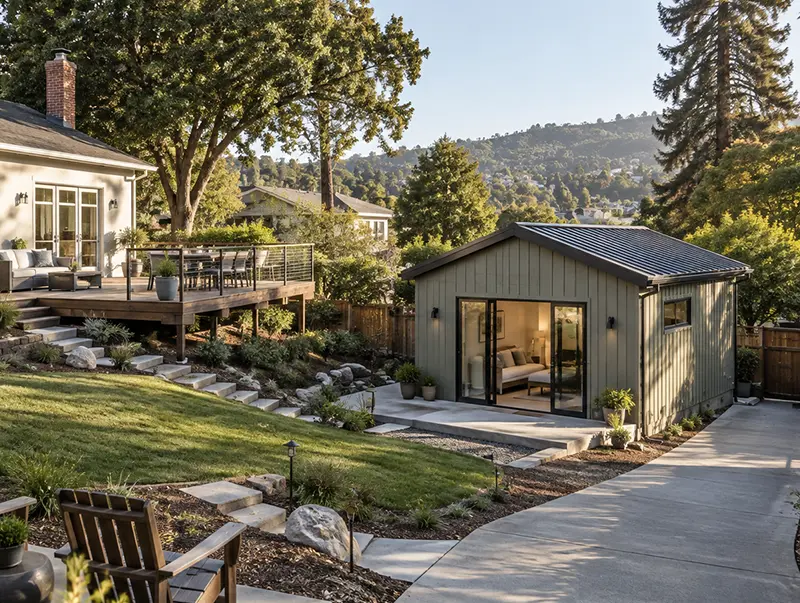
  • A detached small house in the backyard.
  • An attached suite connected to your main home.
  • A converted garage with its own bathroom and small kitchen.

A JADU (Junior ADU) is usually a smaller unit, often up to 500 sq ft, carved out of existing space.

Why are so many Sacramento homeowners building ADUs and in-law units? Because life changes:

  • Parents move in and need privacy and accessibility.
  • Adult children need a stepping-stone before they can buy their own place.
  • Families want rental income without buying another property.

A good ADU builder in Sacramento helps you navigate:

  • Local zoning rules and setbacks.
  • Utility connections and whether you need separate meters.
  • Title 24 energy requirements.
  • Design choices that keep the ADU comfortable and attractive without blowing up the budget.

In the end, an ADU isn’t just another structure—it’s a place where someone will drink their morning coffee, rest, work, and live their life.

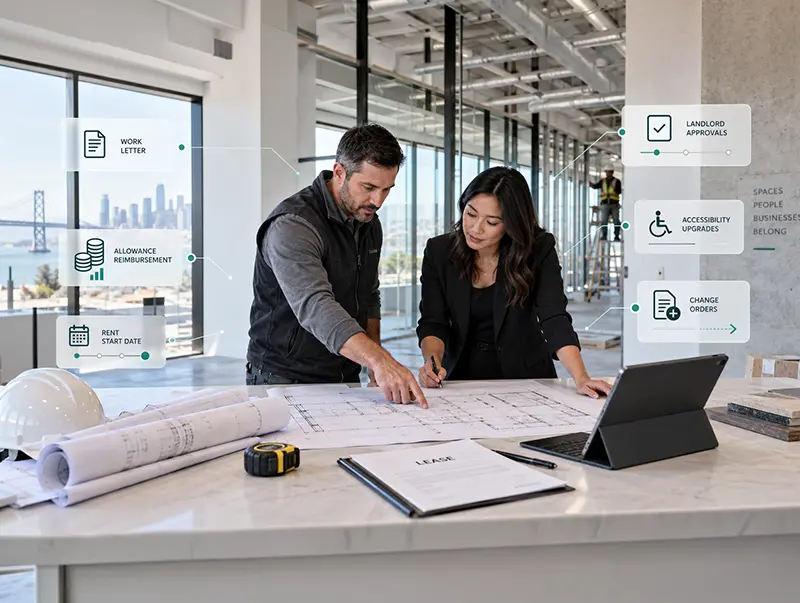
8.3 Tenant Improvements and Commercial Remodeling

It’s not just homes that need thoughtful construction. Businesses in Sacramento and the Bay Area turn to Global Arch for:

  • Office build-outs
  • Retail space renovations
  • Tenant improvements (TI) in existing commercial buildings

Here, the human side looks different but feels the same. A poorly planned remodel can:

  • Disrupt business.
  • Stress out employees.
  • Turn customers away.

A well-managed TI project respects:

  • Schedules, so the business can reopen quickly.
  • Accessibility and comfort, so employees and customers feel good in the space.
  • Code requirements like fire safety, exits, and ADA compliance.

Again, it’s not just about walls and ceilings. It’s about how people feel and function at work.

9. A Real Project Story: Turning a “House Idea” into a Life Upgrade

At the event, Alex shared a story that felt less like a spreadsheet and more like a real-life turning point for a family.

A client in Mill Valley came with a familiar dream:

“We want a new house. A fresh start.”

Many contractors would instantly say, “Great, let’s design a brand-new build.” Instead, Alex asked more questions about their life:

  • How they spent their weekends.
  • How important the neighborhood was.
  • Whether they cared more about square footage, comfort, or long-term value.

Based on that, he suggested a different path:

  • Buy an older home in the same neighborhood they loved.
  • Do a full renovation of the main house.
  • Add an attached ADU as a second floor for flexibility—family, guests, or rental.

When they ran the numbers, it looked something like this:

  • Purchase price: $1,300,000
  • City and county fees: $120,000
  • Design-build renovation + attached ADU: $1,150,000
  • Total investment: $2,570,000

Homes on that same street were worth around $4,000,000.

But the most important part wasn’t the difference between those two numbers. It was what the family got in their everyday life:

  • A home that felt completely new inside and out, without leaving the block they loved.
  • A second unit that could be home for a family member now, and rental income later.
  • The feeling that their contractor had thought about their life, not just the contract.

That’s what you want from a contractor in Sacramento too—someone who doesn’t just build what you say, but helps you make the smartest choice for your future.

10. Where Construction Is Heading: 2026 and Beyond

Looking ahead, a few trends are already obvious in California:

  • ADUs aren’t a fad. They’re becoming a normal part of how families plan housing and income.
  • Multi-functional spaces are the new standard—guest rooms that double as offices, living rooms that flow into outdoor spaces, garages that become studios or suites.
  • Remodeling and additions continue to beat ground-up construction in many neighborhoods where land is limited and location is everything.

For contractors, this means more design-build remodeling and ADU work.
For homeowners, it means the smartest move is often:

“How can we make this property work better for our life?”

not just

“Where else could we move?”

11. How to Choose the Best House Remodeling Contractor in Sacramento

If you’re not looking to start a construction business but you are thinking about remodeling your home in Sacramento, here’s a practical checklist inspired by Alex’s talk.

Look for a contractor who:

  • Is licensed with the CSLB (and you can verify it).
  • Has general liability insurance and workers’ comp if they have employees.
  • Can clearly explain the permit process for your type of project.
  • Provides a written scope of work, timeline, and payment schedule.

Pay close attention to how they talk:

  • Do they explain terms like “load-bearing wall,” “Title 24,” or “rough-in” in plain language?
  • Do they welcome your questions—or act annoyed by them?
  • Do they talk honestly about what could cause delays and how they handle surprises?

The best house remodeling service in Sacramento isn’t just the one with the nicest photos. It’s the one that makes you feel:

  • “I know what’s going to happen next.”
  • “If something goes wrong, they’ll tell me and deal with it.”

As Alex says:

“Clients don’t need perfection.
They need predictability.”

12. A Simple Plan for Your Project: From Idea to Move-In

Whether you’re planning a small bathroom remodel or a full house renovation with an ADU, the process should feel structured, not chaotic. Here’s the kind of straightforward plan Global Arch Construction uses:

1. Talk & Walk the Space

  • You share your ideas, must-haves, and budget.
  • The team walks through your current space (or reviews existing plans).
  • Together, you explore options: remodel, addition, ADU, or a mix.

2. Design, Plan, and Permits

  • Create floor plans, elevations, and sometimes 3D views so you can actually see the concept.
  • Coordinate with structural engineers and other consultants where needed.
  • Prepare construction documents, submit for permits, and respond to any city comments.
  • Finalize a realistic construction budget before major work begins.

3. Build and Complete

  • Set a project schedule so you know what’s happening when.
  • Coordinate all trades, inspections, and deliveries.
  • Provide updates through meetings, messages, or progress photos.
  • Finish with a punch list, final walkthrough, and clear handover.

A clear plan doesn’t remove all stress—but it keeps the stress from taking over your life.

13. What Happens If You Wait—or Choose the Wrong Partner

Every story has two endings: the one you want and the one you’re trying to avoid.

If you wait too long or pick the wrong partner, you might:

  • Spend years in a home that never really fits your family.
  • Miss out on rental income that an ADU could have been generating.
  • Deal with unfinished projects, surprise costs, or even code violations.
  • As a new contractor, burn your reputation early and struggle to recover.

If you move forward with the right plan and partner, you might:

  • Wake up in a home that finally feels like it matches the way your family lives now.
  • Have parents or relatives close by in a comfortable, beautiful in-law unit.
  • Enjoy extra income from a carefully planned ADU.
  • Build a construction business that grows slowly but steadily on trust and referrals.

Construction is never just about walls. It’s about how you’ll live inside them.

14. Community, Connection, and Why These Events Matter

The Sacramento meetup was more than a speech. It was:

  • Contractors comparing real experiences—good and bad.
  • Realtors sharing what buyers actually look for in remodeled homes.
  • Newcomers asking honest questions about permits, codes, and getting started.

Special appreciation goes to the partners who helped bring everyone together—Business Club Sacramento, the hosts who led the discussion, and the real estate professionals who added their insights.

Events like this remind everyone—contractors and homeowners alike—that construction isn’t just a technical industry. It’s a community of people trying to build better spaces and better lives, one project at a time.

15. Final Thoughts: Build More Than Projects—Build Trust

At the end of the talk, the message was simple and human:

  • Don’t get scared by competition—it’s always going to be there.
  • Focus on being honest, organized, and clear.
  • Keep your promises, even on the small things.

It took Alex years to turn his architectural background and field experience into a design-build construction company serving Sacramento and the Bay Area. There was no magic moment—just consistent steps.

Whether you’re:

  • Dreaming of starting your own construction business in California, or
  • Planning a house remodel, ADU, or tenant improvement project in Sacramento,

the principle is the same:

Do it right, and do it in a way you’ll be proud of later.

If you’re ready to take the next step—either in your career or with your home—Global Arch Construction is here to help you plan, design, and build something that actually fits your life.

You dream it. We build it.

Jan 23, 2026