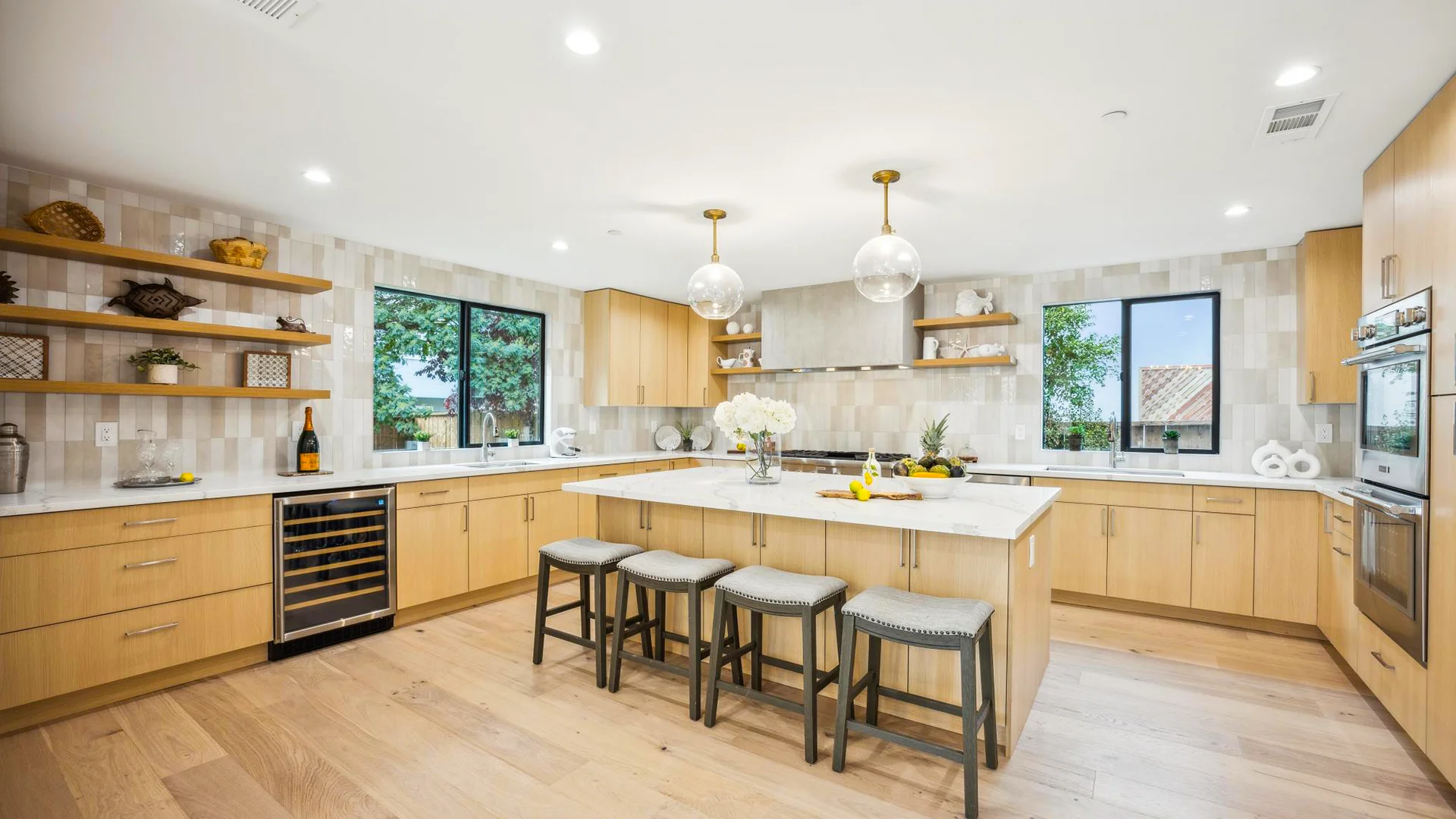
You’ve been saving ideas for years—screenshots, Pinterest boards, maybe a photo of your friend’s beautiful new kitchen in Folsom. Now you’re finally ready to remodel your own kitchen in Northern California.
And then reality hits: how do you actually choose the right contractor to trust with the most-used room in your home?
The wrong choice can mean blown budgets, months of delays, and a half-finished kitchen you’re cooking in on a camping stove. The right choice means a clear plan, honest numbers, and a smooth path from demo day to first dinner party.
In this guide, we’ll walk you through how to find and vet a kitchen remodeling contractor in Northern California—especially in the greater Sacramento area—and how a design-build firm like Global Arch Construction fits into that process.
Why the Contractor Choice Matters More Than Any Single Finish
It’s easy to obsess over countertop colors and cabinet door styles. But for most Northern California homes—especially those 20+ years old—the contractor you choose matters far more than any single product.
Behind your walls, a kitchen remodel often involves:
- Aging or undersized electrical
- Old plumbing lines and valves
- Out-of-date framing or ventilation
- New energy and building code requirements
- Possible structural changes when opening walls
A strong contractor will:
- Investigate these issues upfront, not “discover” them halfway through.
- Plan for code upgrades and inspections instead of improvising on site.
- Coordinate design, engineering, permits, and construction so nothing falls through the cracks.
That’s why this guide focuses less on “what’s trendy” and more on how to pick someone who can actually deliver the kitchen you want—safely, legally, and with as little chaos as possible.
Step 1 — Build a Smart Shortlist of Local Kitchen Remodelers
Instead of starting with a random Google search and calling whoever appears first, build a smart shortlist of kitchen-focused contractors in your area.
Start with people you trust
Ask:
- Friends, family, and neighbors in your city or nearby (Sacramento, Elk Grove, Roseville, Rocklin, Folsom, etc.)
- Local Facebook groups or neighborhood forums
- Co-workers who’ve recently completed a remodel
Ask very specific questions:
“Would you hire them again?”
“How did they handle surprises?”
“Were they on budget and close to schedule?”
Use online research to spot patterns
Then, check:
- Google reviews
- Yelp and similar platforms
- The contractor’s own website and project gallery
You’re not just looking at star ratings. Look for:
- Multiple recent reviews (not all from years ago)
- Mentions of kitchen remodels (not just generic construction)
- Consistent praise for communication, cleanliness, and follow-through
Be cautious if:
- There are only a handful of vague 5-star reviews
- Photos feel like stock images or are obviously from another region
- You can’t tell if they truly do kitchen remodeling or “everything under the sun”
Shortlist 3–5 contractors who clearly focus on kitchens in Northern California and seem active and established.
Step 2 — Verify License, Insurance, and Bond (Non-Negotiables)
In California, any job over $500 in labor and materials requires a contractor to be licensed by the CSLB (Contractors State License Board). For a full kitchen remodel, this is absolutely non-negotiable.
How to check a contractor’s CSLB status
For each company on your shortlist, you should be able to:
- Get their license number from their website, proposal, or business card
- Look them up on the CSLB website
- Confirm:
- License is active
- Correct classification (typically B – General Building)
- Workers’ compensation status (if they have employees)
- Bond information
- Any disciplinary actions
A good contractor won’t be offended if you ask. At Global Arch Construction, we actually walk homeowners through this step so they can see everything themselves and feel confident we’re properly licensed and in good standing.
Why insurance and bond matter
For each contractor, confirm:
- General liability insurance – protects you if something goes wrong on the job site (for example, damage to your home).
- Workers’ compensation – protects you if a worker is injured while working on your project.
- Contractor’s bond – required in California and provides a layer of protection if the contractor fails to meet certain obligations.
If a contractor refuses to provide proof or gives you a hard time for asking, that’s a major red flag.
Step 3 — Look for Kitchen-Specific Experience and Real Local Work
Not all experience is equal. A company that mostly builds decks or room additions might be technically capable, but you’ll usually get better results with a kitchen remodeling contractor who does kitchens all the time in Northern California.
What to look for in a portfolio
As you review their work:
- Are there multiple real kitchens in the gallery?
- Do you see:
- Wall removals or layout changes
- New lighting plans
- Updated electrical and plumbing
- Do the projects look like homes in your area (age, style, size)?
Be cautious if:
- Every photo looks like a magazine or stock image
- They can’t tell you where the project was located
- There’s no variety—just one or two example kitchens
Real-world snapshots
When Global Arch Construction meets with homeowners, we often share:
- The city or neighborhood of the project
- Approximate home age (e.g., 1970s tract home in Citrus Heights, 1990s home in Folsom)
- Key challenges (awkward layout, dark space, old electrical, limited storage)
- The outcome (more open flow, better light, smart storage, improved function)
If possible, ask whether you can visit an active or recently completed project. When you do:
- Notice how clean and organized the site is
- See how trades work together
- Look for clear signage, protective coverings, and how the team interacts with the homeowner
Step 4 — Understand How Design, Engineering, and Permits Are Handled
A full kitchen remodel is much more than “demo and rebuild.” There’s design, engineering, and permitting behind the scenes. How your contractor handles those pieces can make or break your experience.
Separate designer + contractor vs. design-build
You’ll typically see two models:
- Separate designer + contractor
- You hire a designer or architect for plans.
- You then hire a general contractor to build them.
- You may find yourself coordinating between the two—and between subs, engineers, and the city.
- Design-build (like Global Arch Construction)
- One integrated team handles design, construction, and coordination.
- You have a single point of contact and one contract.
- Details are worked out with both design and build in mind from the start.
For many homeowners, design-build reduces miscommunication and change orders, because the same team that designs your kitchen is responsible for making it buildable, code-compliant, and within your budget.
Local Sacramento-area permitting considerations
In Northern California, especially around Sacramento, kitchen remodels often involve:
- Layout changes that need structural review
- Electrical upgrades to meet current code
- Venting and mechanical changes
- Energy efficiency requirements (Title 24 and related standards)
Ask each contractor:
- “Do you handle the permit process for us?”
- “Which jurisdictions do you most often work with (Sacramento, Roseville, Elk Grove, etc.)?”
- “How do you plan for inspections so they don’t slow the job down?”
At Global Arch Construction, we treat permits and inspections as part of the process—not an afterthought—so homeowners aren’t left navigating city offices by themselves.
Step 5 — Interview Contractors and Watch for Red Flags
Once you’ve checked credentials and looked at portfolios, it’s time to interview your top 2–3 kitchen remodeling contractors.
This is where many homeowners focus only on the feel of the conversation and miss key red flags.
Subtle red flags homeowners often overlook
From our experience, here are a few warning signs that don’t always get recognized:
- The contractor dodges detailed questions about scope, schedule, or permits and keeps things vague.
- They promise the moon (“No surprises, ever!” “We’ll be done in no time!”) without explaining how they manage risk.
- They discourage you from checking references or reviews, or say, “We don’t really do paperwork; we like to keep it simple.”
- They push you to sign quickly or offer a “today only” deal for a big project.
If someone reacts defensively when you ask normal, reasonable questions, that tells you a lot.
Questions savvy homeowners ask in the first meeting
Bring a list and take notes. Good questions include:
- Who will be my main point of contact during the project?
- Who will be on-site most days—your own crew or subcontractors?
- How do you handle unexpected issues behind the walls?
- How often will I get updates, and in what form (email, text, calls)?
- Can you walk me through a recent kitchen remodel similar to mine in this area?
At Global Arch Construction, we appreciate homeowners who ask tough questions. It tells us you’re serious about your home—and it gives us a chance to show how we work.
Step 6 — Compare Proposals, Not Just Prices
After your meetings, you’ll start receiving proposals. This is where many people make the mistake of chasing the lowest price without looking at what’s actually included.
What a “good” proposal looks like
A strong kitchen remodeling proposal should clearly outline:
- The scope of work (what’s included and what’s not)
- Major materials and allowances (e.g., cabinets, countertops, appliances, flooring)
- A realistic schedule or estimated timeline
- How permits, design, and engineering are handled
- Any assumptions and exclusions
At Global Arch Construction, we aim for proposals that are detailed enough for you to understand:
- Where the money is going
- What decisions are still to be made
- How changes will be managed
If you receive a one-page lump-sum number with very little detail, it’s hard to know what corners might be cut later.
Deposits, progress payments, and change orders
In California, there are rules about how much a contractor can collect upfront and how payments can be structured. A trustworthy contractor will:
- Keep the initial deposit within legal limits
- Tie progress payments to meaningful milestones
- Put change orders in writing with costs and schedule impact clearly explained
Be wary of:
- Large cash-only deposits
- Requests for big payments far in advance of the work
- “We’ll figure it out later” when you ask how changes are handled
Step 7 — What a Solid Kitchen Remodeling Contract Should Include
The contract is where your entire project is defined. Don’t treat it as a formality.
A good kitchen remodeling contract should include:
- Names and license information for the contractor
- A clear description of the work, including drawings or attachments
- The payment schedule and total cost
- Approximate start and completion dates
- How changes will be handled
- Basic warranty information
- Required California notices in plain language
Take your time, read it, and ask questions. A professional contractor won’t rush you. At Global Arch Construction, we see the contract as a communication tool, not just a legal document—everyone should walk away with the same expectations.
Daily Life During a Kitchen Remodel: Questions to Ask Before You Sign
Your kitchen is central to daily life. Before you sign with any kitchen remodeling contractor in Northern California, ask about what living through the remodel will actually feel like.
Good topics to cover:
- Dust and protection – How will they protect adjacent rooms, flooring, and furniture?
- Site cleanliness – What is the end-of-day cleanup routine?
- Noise and work hours – Typical start and finish times; any weekend work.
- Temporary kitchen setup – Where you’ll cook, store food, and wash dishes.
- Access and security – How they manage keys, locks, and alarm systems.
At Global Arch Construction, we make a point to set these expectations early, so there are no surprises when the project starts. For many families, this is the difference between “manageable disruption” and “never again.”
After the Dust Settles — Warranty, Support, and Caring for Your New Kitchen
A great contractor doesn’t disappear once the final check clears.
Punch list and post-completion support
Ask:
- How do you handle final walkthroughs and punch lists?
- Who should I contact if I notice a small issue after move-in?
- How long after completion do you typically handle minor tweaks?
A company that genuinely cares about their work will have a simple, clear process for this.
Warranty and care
Your contract should outline basic warranty terms. Beyond that, good contractors will also give you:
- Guidance on cleaning and maintaining cabinets so finishes last
- Tips to protect countertops from stains, heat, or chips
- Recommendations for flooring care (especially for wood and tile)
- Advice on moisture control to protect your investment
Global Arch Construction often leaves homeowners with simple, practical maintenance tips so the kitchen looks and functions beautifully for years—not just the first month.
How Global Arch Construction Approaches Kitchen Remodeling in Northern California
Everything in this guide describes what you should expect from any good kitchen remodeling contractor in Northern California.
Here’s how we align with those expectations:
- We operate as a design-build team, so your design, engineering, permits, and construction are coordinated under one roof.
- We’re fully licensed, insured, and bonded, and we invite homeowners to verify our standing.
- Our proposals are detailed and transparent, designed so you can compare “apples to apples” with other bids.
- We set clear expectations about schedules, communication, dust, and temporary setups before demo begins.
- We treat the contract and payment structure as protection for both sides, in line with California’s home-improvement rules.
- We stay engaged through final walkthrough, punch list, and warranty support, not just until the last payment.
If you’re searching for a kitchen remodeling contractor norther california homeowners can rely on, we want you to feel informed enough to ask every question in this guide—of us and anyone else you interview.
Ready to Interview a Kitchen Remodeling Contractor in Northern California?
Remodeling your kitchen is a big decision, but choosing a contractor doesn’t have to be a gamble.
If you’re in the Sacramento and greater Northern California area and you’d like:
- A clear, honest conversation about your options
- A design-build team that can guide you from first idea to final walkthrough
- A contractor who welcomes questions instead of sidestepping them
We’d be happy to talk.
Get a Custom Quote from Global Arch Construction, and let’s see if we’re the right fit for your kitchen remodel.
FAQ
How many kitchen remodeling estimates should I get before choosing a contractor?
Most homeowners benefit from 2–3 detailed proposals. More than that can become overwhelming and doesn’t always add clarity—focus on depth and transparency, not sheer quantity.
What is a reasonable deposit for a kitchen remodel in California?
A reasonable deposit follows California’s home-improvement rules and is kept modest relative to the total project cost. Be wary of large, front-loaded payments or cash-only requests.
Can I stay in my home during a kitchen remodel?
In most cases, yes—but expect disruption. A good contractor will help you plan a temporary kitchen setup and set realistic expectations around dust, noise, and work hours.
How long does a typical kitchen remodel take in Northern California?
Timelines vary with scope, but many full kitchen remodels take several weeks to a few months, including inspections and any structural or systems upgrades.
What should I do if a contractor pressures me to sign on the spot?
Slow down. High-pressure tactics are a red flag. A trustworthy contractor will let you review the proposal and contract in your own time and will happily answer follow-up questions.