Garage Conversions for Northern California Homes

Lorem ipsum dolor sit amet, consectetur adipiscing elit. Suspendisse varius enim in eros elementum tristique. Duis cursus, mi quis viverra ornare, eros dolor interdum nulla, ut commodo diam libero vitae erat.

Default Button Text
Nov 6, 2025
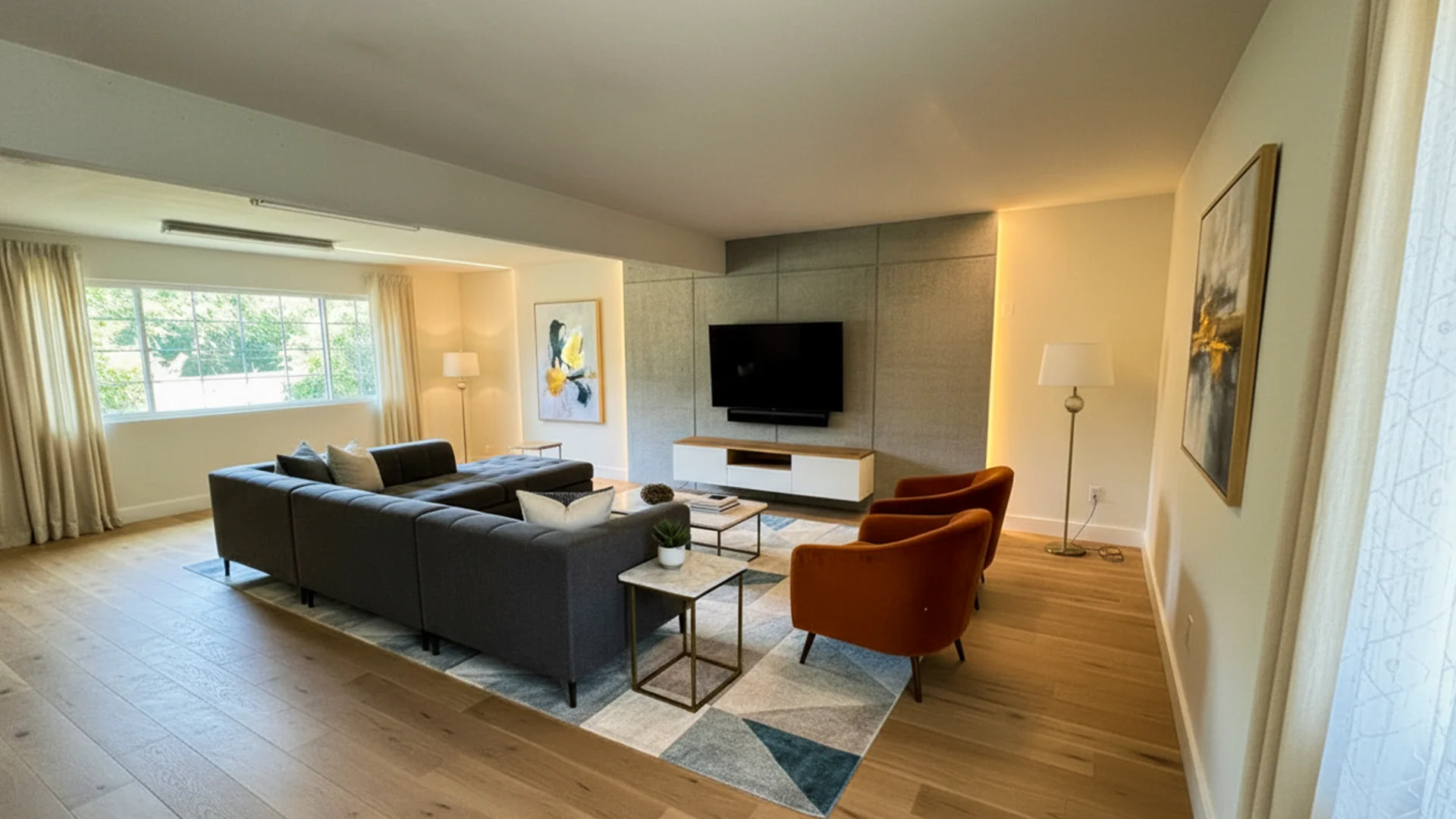
Modern room design of converted from a garage.

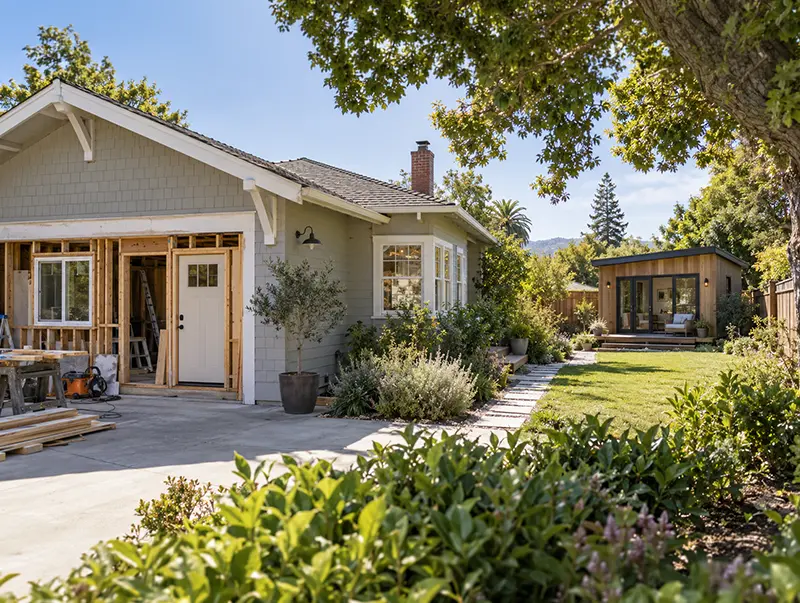
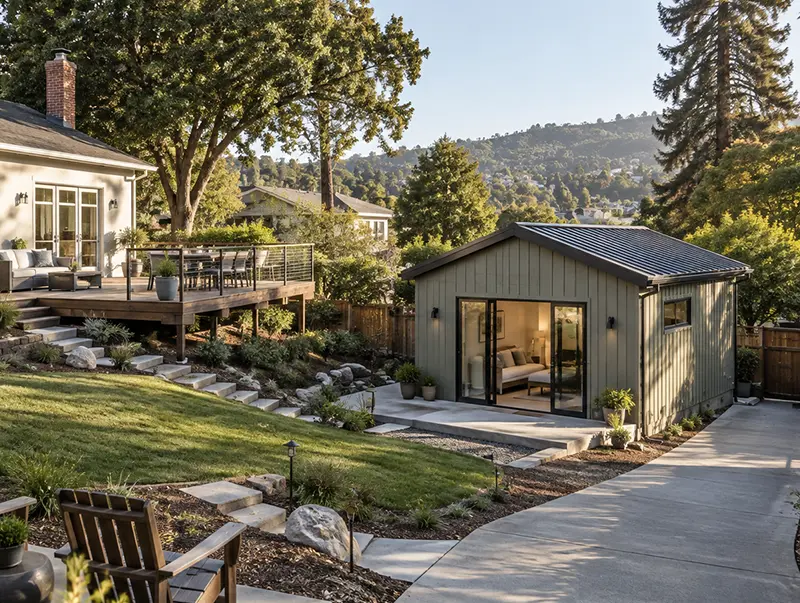
You bought your home for what it was. Now you need it to be more. Maybe a parent is moving in, a college grad is back, or you want rental income to steady the mortgage. Converting an underused garage into livable space can be the fastest, most practical way to get there—especially in Northern California, where every square foot counts. At Global Arch Construction, we turn garages into quiet, comfortable rooms (or full ADUs) that look and live like they were always part of your home.

What Counts as a Garage Conversion vs. an ADU?

A garage conversion reuses the existing garage and turns it into conditioned, code-compliant space for the primary home (family room, office, bedroom + bath) or a separate ADU (Accessory Dwelling Unit) with its own kitchen, bathroom, and entrance. Some lots also allow a JADU (Junior ADU), which is smaller and typically includes an efficiency kitchen.

Pros of converting the existing shell

  • Faster path than building new: foundation, walls, and roof already exist.
  • Smaller site footprint: less disruption to yards and setbacks.
  • Typically more cost-effective than detached construction.

Trade-offs to plan around

  • Loss of covered parking and some storage.
  • Layout spans follow the existing structure.
  • Slab moisture and levelness often need upgrades for a “home-like” finish.

Why Homeowners Choose Garage Conversions

  • Space without moving. Add a suite, office, or playroom inside your footprint.
  • Rental potential. With ADU permitting, you can unlock steady income.
  • Multigenerational living. Create privacy and accessibility for parents or adult children.
  • Resale appeal. Designed, inspected, and fully permitted space improves marketability.
  • Speed. Reusing the shell shortens design, permitting, and build compared to ground-up.

Design & Interior Trends in Northern California (What’s Popular Now)

Picture walking into your former garage and not feeling a garage at all. The room is bright, quiet, and balanced—no echo, no drafts, no clues it was concrete yesterday. That’s the target. Here’s how current NorCal trends help us get there:

  • Open, flexible layouts. One room, many lives. This week it’s a guest suite; next year it’s a rental-ready studio. We favor furniture-first planning: a bed that folds, a desk that tucks, storage walls that keep clutter invisible.
  • Bigger daylight moves. Larger windows, French doors, or a well-placed skylight erase the “former garage” feeling. In street-facing conditions, clerestory or frosted glass preserves privacy without dimming the room.
  • Built-ins and vertical storage. Custom wardrobes, bench seating with hidden compartments, and shallow wall cabinets claim the inches a garage rarely used well.
  • Convertible pieces. Murphy beds, pocket doors, fold-down tables—every decision aimed at “small space, big utility.”
  • Quiet comfort. Solid-core doors, resilient channels where needed, and targeted insulation push the room into “this is part of the house” territory. The difference is instant the first time you close the door.
  • Modern, durable finishes. Luxury vinyl plank or engineered hardwood, quartz counters, easy-clean tile—especially smart for rental-ready ADUs.
  • Envelope upgrades. Insulation, air sealing, and high-performance windows keep summers cooler, winters warmer, and energy bills predictable.

Trend-led combo we love: All-electric heat-pump mini-split + LVP floors + quartz counters + matte black or brushed hardware = modern look, quiet comfort, rental-proof durability.

Northern California Realities

Our climate demands careful insulation and ventilation so converted spaces feel right in August heat and during winter rains. We also plan privacy (window placement, entry paths, fencing) and parking strategy early so you’re smooth with both the city and your neighbors.

  • Climate/comfort: Better windows, tight air sealing, right-sized HVAC, and balanced ventilation are the difference between “nice” and “lives like original.”
  • Parking/curb appeal: Conversions remove covered parking; we offset with driveway striping, optional carports, or light landscape refreshes to keep curb appeal strong.
  • Local nuance: Rules are statewide, but submittal steps and review pace vary by city/county. We confirm the exact process for your jurisdiction during our feasibility visit.

Permit & Code Pathway

Short version: If you bring a complete plan set, respond quickly to comments, and meet energy/egress/safety rules, ministerial approvals are straightforward. Here’s how we make that feel easy:

1) Planning & use check

  • Confirm whether the space will be primary living area, ADU, or JADU.
  • Verify basics: setbacks (if exterior openings change), height, lot coverage, and parking allowances. In many cities, replacement parking for garage-to-ADU conversions isn’t required.

2) Building & safety

  • Structure & slab: We assess headroom, slab levelness, moisture, and any framing corrections so it passes inspections the first time.
  • Egress & fire: Proper window sizes, door swings, and fire separation if attached to the main house.
  • Smoke/CO alarms: Code-compliant placement tied to the new use.

3) Energy (Title 24) & CALGreen

  • Insulation, window performance, HVAC efficiency, and ventilation. Our energy modeling makes sure paper and field conditions match.

4) Utilities

  • Electrical panel capacity (many projects upgrade), bath/kitchen exhaust, sewer tie-in, and gas capping if going all-electric.

5) HOA

  • Associations can set reasonable design standards but cannot prohibit qualifying ADUs. Bring us CC&Rs early; we’ll align your design and finishes accordingly.

Solar nuance: Garage-to-ADU conversions often avoid solar requirements that apply to new ADUs—one reason conversions can be faster and more economical.

Budget Drivers to Plan Around

We don’t list prices publicly, but we absolutely plan what shapes budget. When homeowners understand these early, projects stay calm and predictable:

  • Utility pathways. The quiet budget mover. If the sewer run needs a new trench or slope correction, or if the electrical panel must be upsized/relocated, we design that early and coordinate inspections so the schedule doesn’t slip.
  • Slab condition. Most garage slabs aren’t “house-ready.” Moisture mitigation, leveling, thermal breaks, and sometimes a thin topping slab are what make finished floors feel right.
  • Envelope upgrades. Code-required insulation, air sealing, and window/door performance are non-negotiable—and worth it. Comfort and utility bills depend on this layer.
  • Mechanical choices. The right-sized mini-split, smart bath fans (timers/humidity sensors), and good ducting/vent terminations keep air clear without noise.
  • Lead times. Windows, exterior doors, electrical gear, and some finishes can bite the schedule. Locking selections during design is the best schedule insurance you can buy.
  • Hidden conditions. Dry rot at sill plates, termite damage, or undersized members appear after demo sometimes. Our preconstruction walkthrough flags the likely suspects so your contingency is realistic and change orders stay rare.

How we protect the budget: A detailed scope, real selections (not vague allowances), and a milestone schedule tied to procurement. No mysteries, no “we’ll pick later” traps.

Mechanical Choices: Heat Pumps, Ventilation & Water Heating

Heat-pump mini-splits are the NorCal workhorse: efficient, quiet, and easy to zone for one room or a compact ADU. For baths and kitchens, we specify exhaust with backdraft dampers and timers/humidity controls so moisture leaves without stealing all your conditioned air. Water heating depends on use and space; many owners choose on-demand (tankless) to save square footage and cut standby losses. Increasingly, clients pick all-electric for simplicity and future-proofing; we’ll assess panel capacity and circuit layout at the start.

  • Mini-split vs. ducted vs. radiant: Most garages favor a mini-split for simplicity; ducted can work in specific layouts; radiant is great in targeted cases but requires early slab planning.
  • Fresh-air strategy: Depending on airtightness and city rules, balanced ventilation keeps air fresh without drafts.
  • Rebates/solar: Programs change often; we check current incentives during preconstruction.

The Process Timeline (What to Expect)

Think of your project in chapters. Each chapter ends with a small win—drawings approved, windows ordered, inspections passed—so momentum never stalls. Our design-build model keeps architecture, engineering, and construction in the same room, literally and figuratively.

Chapter 1 — Discovery & Feasibility (Days → 1–2 weeks)
We walk the site, check headroom, inspect the slab, peek at framing, and look at utility capacity (panel, sewer, gas). You share goals: family use vs. rental, accessibility needs, privacy wishes. We outline paths—primary space, ADU, or JADU—and flag anything that could affect schedule or scope.

Chapter 2 — Design Options & Selections (2–4 weeks, driven by your decisiveness)
We present 1–2 layout options, talk daylight and storage, and pick finishes early (windows/doors, flooring, fixtures, HVAC). Early selections let us order long-lead items now, not weeks later.

Chapter 3 — Engineering, Title 24 & Permit Set (2–5 weeks)
We finalize structure details, energy calcs, and the notes that make inspectors happy. A clean, complete plan set is the difference between a quick yes and a slow maybe.

Chapter 4 — Permitting (city-dependent)
Ministerial review; we respond fast to comments. Because selections are already locked, we can order critical components while plans route—no idle time.

Chapter 5 — Build (8–14 weeks typical, scope-dependent)

  • Demo & slab work (moisture/levelness corrections).
  • Rough-ins (electrical, plumbing, mechanical) and any structural corrections.
  • Insulation & drywall (the room starts to feel like a room).
  • Cabinetry, tile, flooring (watch it come to life).
  • Trim, paint, finals (punch list and closeout).

Chapter 6 — Closeout & Move-In
We walk the space together, review care basics, provide documentation, and confirm you’re ready—whether that’s family arriving or a rental listing going live.

Reality check: Hidden conditions or slow selections are the top timeline drags. Our milestone check-ins and early procurement keep you out of the danger zone.

Quick Case Snapshots (Local Examples)

San Francisco — ~253 sq. ft. Bedroom + Bath
Lowered slab for headroom, upgraded to a 200A panel, relocated laundry, added heat pump + tankless. A hardscape refresh improved drainage and curb appeal.

Palo Alto — ~680 sq. ft. Carport → ADU
Two bedrooms, kitchen, bath, and walk-in closets within the existing footprint/roofline. Rental-ready plan with a private entry and durable finishes.

Sacramento — ~506 sq. ft. Garage → ADU
Full living + kitchen + bedroom + bath + WIC. Energy-smart glazing and shading tuned for summer comfort.

Roseville — ~420 sq. ft. 2-Car Garage → JADU
Open kitchen/living with a bedroom and bath. Space-saving casework, pocket doors, and a clever laundry niche.

Contractor Vetting Checklist (Save/Print)

You don’t need a hundred questions—just the right ones. Print this, and if a contractor stumbles, you’ll know early.

  1. License & insurance verified; ADU/garage-conversion portfolio you can see.
  2. Complete scope in writing (not vague allowances). Includes slab strategy, utility paths, envelope upgrades, and finish schedule.
  3. Selections locked before permit. Windows/doors/HVAC model numbers named; lead times acknowledged in the schedule.
  4. Title 24/CALGreen literacy. Ask how they model energy and handle ventilation, egress, and fire separation.
  5. Milestone schedule with procurement pins (when are windows ordered? when are inspections booked?).
  6. Change-order policy (what triggers one, how it’s priced, how fast you’re told).
  7. Documentation during build: photos of framing, rough-ins, insulation—your “X-ray” for future maintenance.
  8. References you can contact—and, ideally, a nearby project you can drive by.

Care & Maintenance After the Conversion

Treat your new space like the rest of your home, with two habits that matter more here: ventilation and envelope checks. A former garage lives perfectly if air and water keep behaving.

  • Use fans smartly. Run the bath fan during/after showers, and the range hood while cooking. If the fan has a humidity sensor or timer, use it; it’s there to protect finishes as much as comfort.
  • Clean the mini-split filters. Most slide out and rinse in minutes. A clean filter keeps the room quiet and efficient.
  • Inspect sealants & flashing yearly. Walk the exterior once a year: window/door seals, thresholds, and any penetrations. Touch up caulk and paint where sun and rain work hardest.
  • Mind thresholds & weeps. Keep door thresholds clear and window weep holes unobstructed so water exits where it should.
  • Test safety devices twice a year. GFCI/AFCI and combination smoke/CO alarms—push the buttons, replace batteries as needed.
  • If renting: Add a simple one-page care guide for guests/tenants (how to use the bath fan, how to clean the mini-split filter, trash day). You’ll get better reviews and fewer calls.

FAQs

Do I lose required parking if I convert the garage?
Many California cities do not require replacement parking for garage-to-ADU conversions. We’ll confirm parcel-specific rules at the outset.

How long does a garage conversion take, start to finish?
Design/engineering, permits, and build vary by city and scope. Expect chapters, not chaos. We map a date-stamped plan after the site walk and protect it with early selections and procurement.

Can I rent it right away?
If the space is permitted as an ADU or JADU and you meet local rental rules, yes. We’ll help you choose the right path for your goals.

What if my garage has structural or moisture issues?
Common—and solvable. We plan slab moisture mitigation, levelness fixes, and structural corrections so the finished room feels like original house space.

Do I need solar for a conversion?
Many garage-to-ADU conversions do not require solar the way new detached ADUs do. We’ll confirm based on your city and project type.

Next Step

If you’re searching for garage conversions in Northern California, start with a quick feasibility call. We’ll discuss family vs. rental goals, check utility capacity and slab conditions, outline the permit path, and build a realistic schedule that protects your timeline and budget.

Global Arch Construction brings design, engineering, and construction together—so your garage stops being storage and starts being the space your life needs.

Nov 6, 2025